
What Is an Oxygen-Infused Bath? Los Angeles Experts Explain Kaqun Therapy
Key TakeawaysOxygen immersion therapy use stabilized dissolved-oxygen water to deliver oxygen through the skin and gut,
Press Release Disclaimer: This is a press release distributed through the XPR Media network. It has not been independently verified by our newsroom.

Key Takeaways
- Oxygen immersion therapy use stabilized dissolved-oxygen water to deliver oxygen through the skin and gut, addressing cellular hypoxia at its source rather than masking downstream fatigue and inflammation symptoms.
- Kaqun oxygen water measures 400-500 mmHg in dissolved-oxygen partial pressure, roughly 10 to 15 times higher than standard tap or bottled water, and stays stable long enough for the body to absorb it.
- Research on oxygen water has linked increased oxygen availability to immune cell activation, including higher natural killer cell activity, while a separate study combining oxygen-water drinking and bathing recorded measurable gains in reaction time and grip strength.
Are You Fatigued Because You’re Oxygen-Starved?
Waking up tired after a full night’s sleep, struggling to focus by mid-afternoon, or noticing that cuts and bruises take longer to heal than they used to are common frustrations. Most people chase these symptoms one at a time: more sleep, more caffeine, more supplements. But a growing body of research points to a shared root cause behind fatigue, slow healing, and even foggy thinking: insufficient oxygen reaching the cells that need it most.
This is the idea behind cellular hypoxia, and it’s also the reason oxygen immersion therapy, sometimes called Kaqun therapy, have drawn attention as a way to resupply the body at the tissue level rather than mask a single symptom. Los Angeles-based expert, Kenton Gray from Kure Health explains that Kaqun water carries dissolved oxygen at a partial pressure of 400 to 500 mmHg, which is about 10 to 15 times higher than what’s found in standard tap or bottled water, and that oxygen stays stable in solution long enough for the body to actually use it.
The sections below break down what oxygen immersion actually does inside the body… and what the evidence says about it.
The Hidden Cost of Cellular Hypoxia
Every cell relies on a steady oxygen supply to keep its basic machinery running. Mitochondria, the tiny structures inside cells that generate energy, depend almost entirely on oxygen to produce ATP, the molecule that powers everything from muscle contraction to nerve signaling. When oxygen delivery slows down, even slightly, energy production slows down with it, and the effects ripple outward into fatigue, sluggish thinking, and a body that struggles to repair itself.
Cellular hypoxia rarely announces itself with a single dramatic symptom. Instead, it tends to show up as a cluster of complaints that seem unrelated on the surface: persistent tiredness that doesn’t improve with rest, wounds or injuries that heal more slowly than expected, low-grade inflammation that lingers, brain fog that makes concentration harder, and visible signs of aging that seem to accelerate. Wound healing is a particularly clear example, since new tissue formation depends on oxygen-hungry fibroblast activity, and stalled healing is often a sign that oxygen simply isn’t reaching the area fast enough.
Cellular hypoxia matters because it sits upstream of so many downstream complaints. Liver detoxification pathways require oxygen to function properly, neurons need a continuous oxygen supply to fire correctly, and the immune system’s ability to mount a strong response is closely tied to how well-oxygenated tissue is.
Addressing oxygen delivery directly, rather than treating each downstream symptom separately, is the logic behind oxygen immersion therapy.
How Oxygen Baths Restore Cellular Oxygen
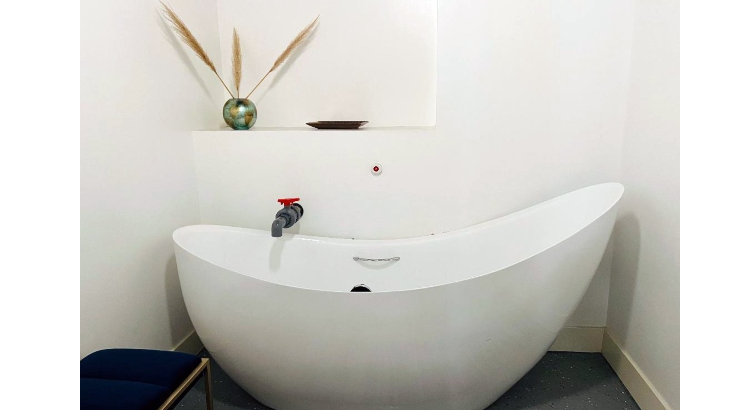
Oxygen immersion therapy works by surrounding the body in water that carries far more dissolved oxygen than anything found in nature or in a typical bathtub. During a session, a person is submerged in warm, oxygen-enriched water for roughly 50 minutes, giving the skin and mucous membranes extended contact time with a concentrated oxygen source. The warm water supports relaxation, but the main purpose is giving the body a direct route to oxygen that bypasses the lungs.
400-500 mmHg: Measuring Dissolved Oxygen
Dissolved-oxygen partial pressure, written as pO₂, is the standard way scientists compare how much usable oxygen a liquid actually holds. Standard tap or bottled water typically measures between 5 and 8 mmHg. Aerated “oxygenated” bottled waters push that up to somewhere between 20 and 40 mmHg, but that oxygen tends to dissipate within minutes of opening the bottle. Kaqun water measures at 400 to 500 mmHg, a level that stays stable in solution rather than escaping as gas, which is what makes extended transdermal absorption possible.
For comparison, hyperbaric oxygen therapy delivers pressurized oxygen through the lungs and can push arterial oxygen levels far higher, but it works through an entirely different pathway and delivery mechanism. Oxygen immersion takes a slower, skin-and-gut-based route that doesn’t require pressurized chambers or breathing masks.
Transdermal and Oral Absorption Pathways
Skin allows dissolved gases to pass through it, and that permeability is the mechanism oxygen immersion relies on. When a person soaks in stabilized oxygen water, oxygen molecules move across the skin barrier and into surrounding tissue, gradually raising local oxygen levels in a way that inhaled oxygen alone doesn’t replicate. The same stabilization technology allows oral absorption as well, since drinking oxygen-enriched water lets oxygen penetrate the mucous membranes of the stomach and gastrointestinal tract.
The bonded oxygen chains in this stabilization technology continue releasing dissolved oxygen into the body for two to three hours after a session. Practitioners have described a reduction in mental and physical tiredness fairly soon after a session.
The Evidence Behind Oxygen Immersion
Kaqun water has been studied for more than a decade by universities, government institutes, and laboratories – establishing a research base that goes well beyond anecdotal reports. That body of work has looked specifically at how oxygen immersion affects immune markers, cardiovascular measures, and cognitive performance, which are the areas most closely tied to complaints of fatigue and slow recovery.
Immune Cell Activation and NK Cells
One of the more notable findings involves how increased oxygen concentration affects the immune system at a cellular level. Research has found that oxygen-water treatment boosts the killing potential of neutrophil granulocytes, increases lymphocyte activation, and raises the ratio of natural killer, or NK, cells, which play a role in identifying and responding to virally infected or abnormal cells. Since mitochondrial ATP production is itself oxygen-dependent, better-oxygenated cells are better positioned to generate the immune cells the body needs, including natural killer cells, B cells, and T cells.
This matters for anyone dealing with recurring infections, slow recovery from illness, or general immune sluggishness, since immune cell production and function are tied directly to how much energy those cells have available to do their job.
Cognitive and Physical Performance Gains
A study involving 10 participants who both consumed and bathed in Kaqun water recorded several measurable changes, including increased oxygen saturation, improved reaction time, increased grip strength, reduced stress levels, improved balance, and lowered blood pressure, though the study noted that a larger participant group and fewer measured parameters could strengthen the results, and standing-stability measurements actually decreased, possibly due to participant fatigue. Separately, research examining cognitive function in elderly participants found meaningful shifts in systolic blood pressure, reflex time, cognitive processing time, and stress index after oxygen-water exposure.
Taken together, these findings point to oxygen availability affecting energy levels along with focus and physical response. Reaction time and grip strength are physical performance markers, while reflex time and cognitive processing speak to mental sharpness, suggesting that the same oxygen deficit driving fatigue may also be dulling focus and slowing physical response.
Oxygen Delivery Looks to Address Hypoxia at Its Source
Cellular hypoxia is a common thread running through fatigue, slow healing, inflammation, and even accelerated aging, and restoring oxygen delivery directly might do more good than treating each symptom in isolation. The research behind stabilized-oxygen water, from immune cell activation studies to cognitive performance findings, gives this approach a scientific footing that goes beyond simple relaxation therapy.
Anyone weighing whether cellular hypoxia might be behind their own fatigue, slow recovery, or brain fog can start by learning more about oxygen immersion therapy and how it fits alongside other daily habits that support energy and healing.
Kure Health or KureOS
kenton@veracorgroup.com
+1 818 858 5551
621 S. Spring St.
Los Angeles
CA
90014
United States

